Tillerless Sailing Drill for Downwind Technique
Tillerless sailing exposes downwind rudder, sheeting, and body-position errors while building feel for CE and CLR control.
Tillerless sailing is a powerful downwind drill. It is impressive how much one drill can reveal about downwind technique, even at Olympic levels. It highlights rudder errors, sheeting mistakes, and body-position errors rapidly, while giving a different and useful sense of feel and connection with the boat.
How to get started
Start in a light breeze, around 4–7 knots.
Set up by the lee with the boat balanced and the tiller feeling very light, with no helm.
Let go of the tiller extension and let it sit on the leeward deck.
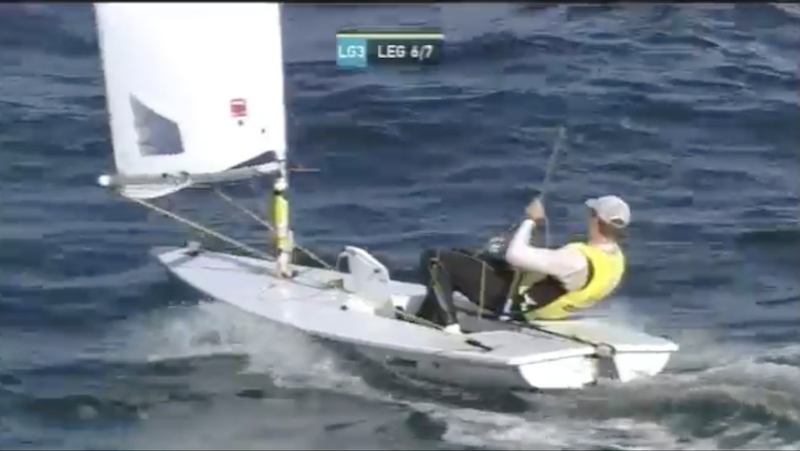
Control boat direction using body weight, body position, and sheet tension.
Once you feel control of direction, work on upturns, downturns, slow presses, and even windward and leeward mark roundings without using the tiller.
Moving CE and CLR laterally
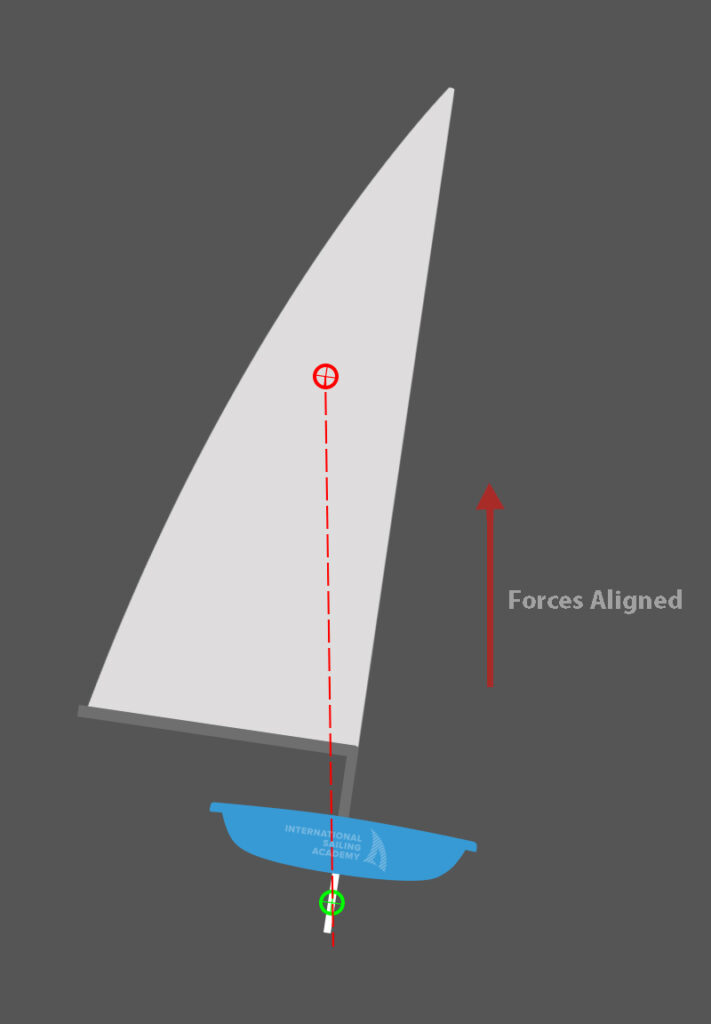
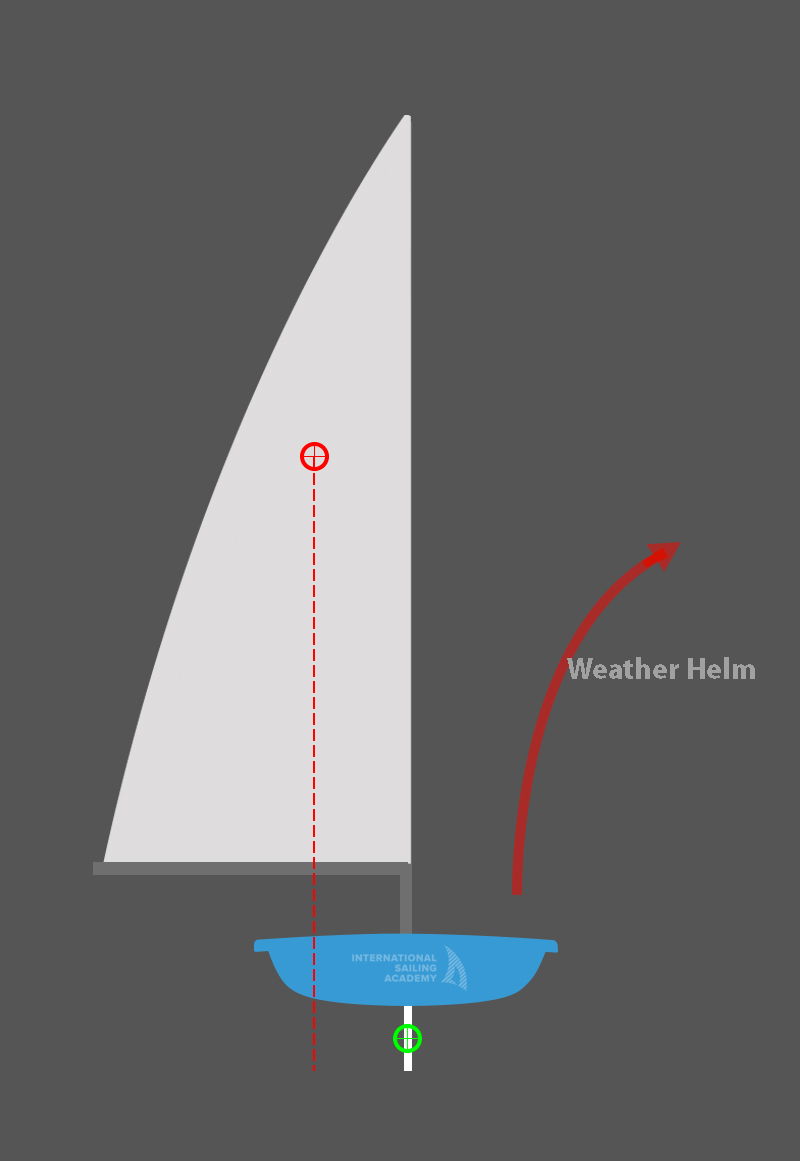
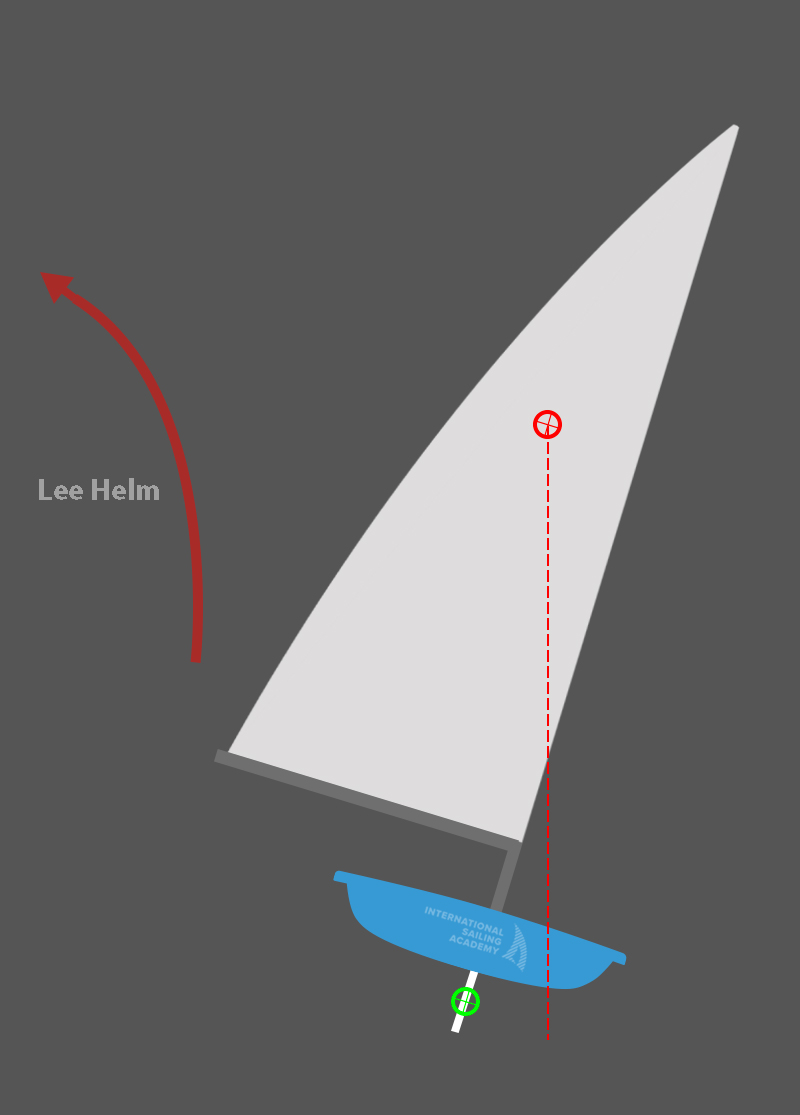
When sailing deeper angles downwind, the forces on the boat are manipulated best in a more lateral fashion. Instead of helm coming primarily from fore-and-aft separation of center of effort and center of lateral resistance, the emphasis is on their lateral relationship. Forces moving further apart in an outboard direction create turning force in the boat.
The downwind technique is to control these lateral forces with heel. Press weight to leeward to head up. Heel the boat to windward to bear away. This manipulates lateral separation of the two forces. We use leeward to mean the side the sail is on.
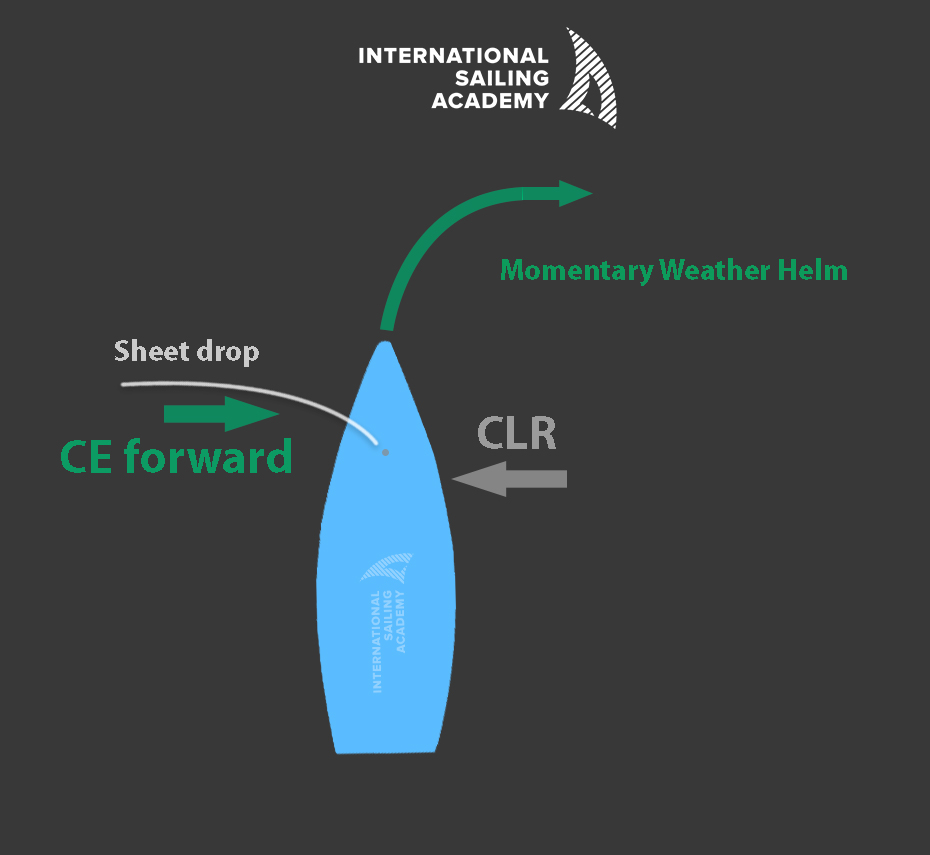
Sheet tension indirectly affects this turning force by dumping or creating power, which initiates heel and creates the effect described above. Sheet tension and heel work together. Adding active heel with the body in combination with a sheet drop enhances the effect.
Moving CE and CLR fore and aft
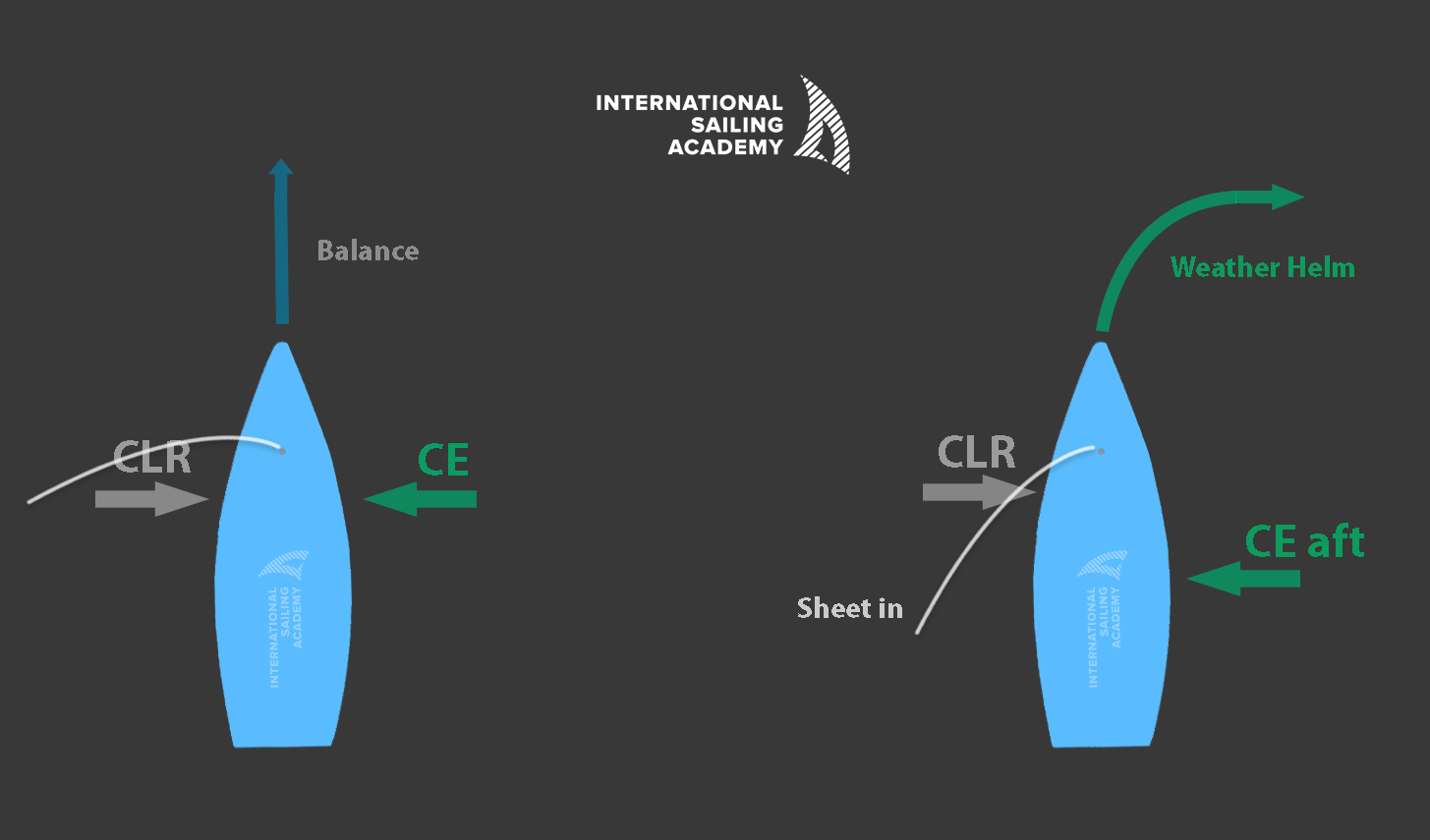
Sheet tension can also directly affect the boat’s turn even without heel changes, viewed through CE and CLR from above. This is intuitive on broad reach and dead-downwind angles and more pronounced on hotter angles or in windier conditions.
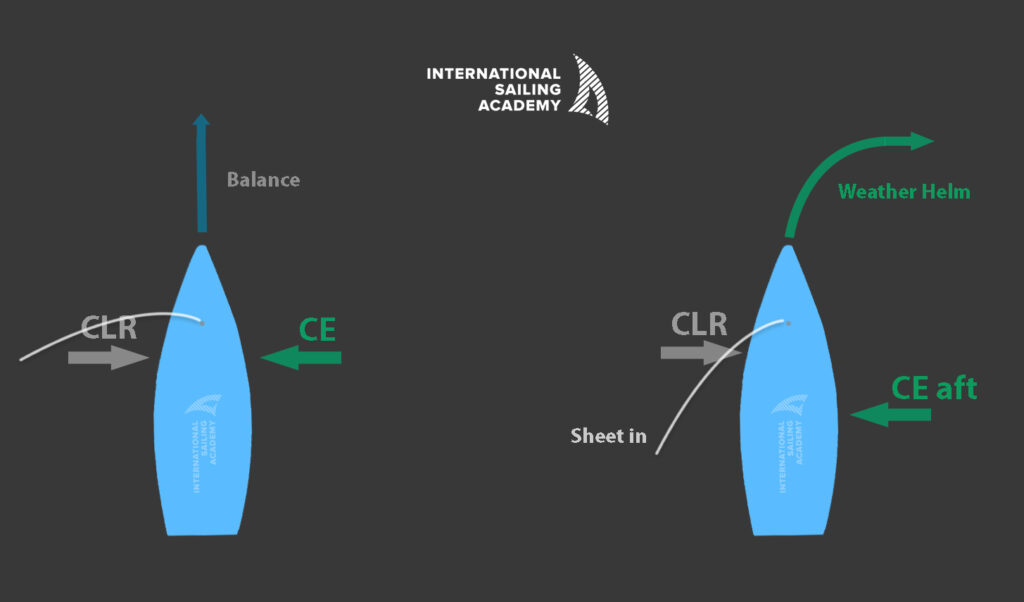
Sheeting in from a broad reach or dead downwind causes weather helm as the center of effort moves aft.
CLR can be moved dramatically with body weight fore and aft. To move CLR back, move shoulders back and down toward the rudder, not outboard. This cancels weather helm or initiates lee helm. Use this while tillerless sailing to feel the effect.
By the lee
Once by the lee, flow and force direction reverse. Most of the time by the lee, especially at deeper angles, sheet tension affects heel. Because lateral forces dominate, heel affects direction most. If you drop sheet deep by the lee, closer to dead downwind, the boat heels more and lateral forces twist the boat farther by the lee to the new angle.
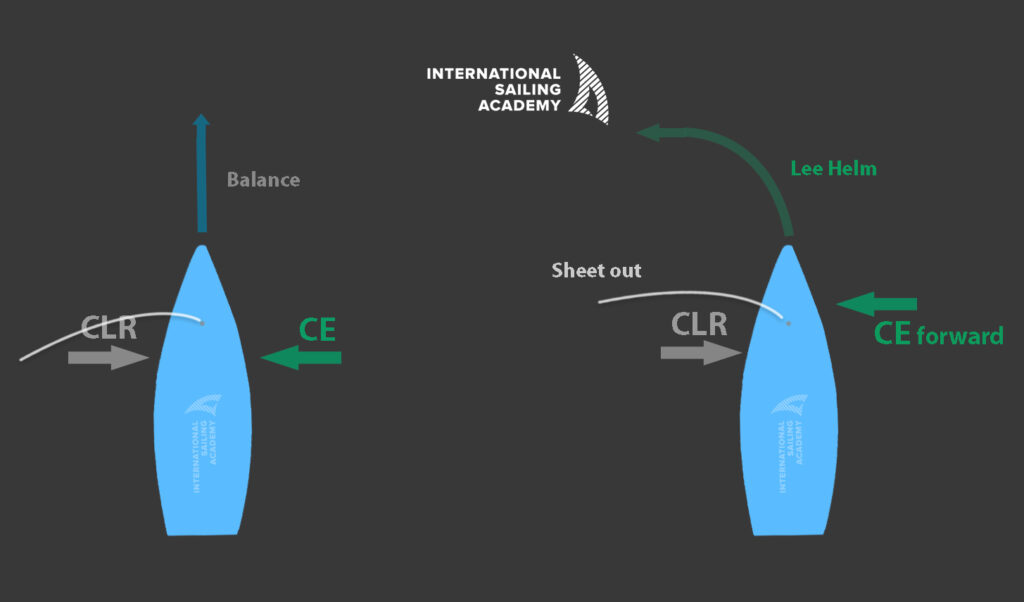
One interesting phenomenon is that when sailing hotter by the lee, sheeting out can actually cause heading up. Because forces on the sail and blades are reversed, and the leech is far forward, it tends to push the bow back toward dead downwind.
Spinning out on upturn
Sometimes while tillerless sailing, the boat wants to move up too fast and gets stuck on a beam reach. Anticipate more. Start movements and sheeting earlier than you think. Be gentle with the press and initiation.
Moving the upper body aft toward the rudder moves CLR aft and helps cancel weather helm. Do it early.
If you still spin out to a beam reach, notice whether you are driving too high with the sheet out too far. This is paradoxical because the instinct is to ease to bear away. But if the sail is luffing at the leading edge, CE has moved back and become more leech-dominant, and the boat will not bear away again until you trim in with some windward heel.
Takeaway
Understanding boat forces complements downwind technique and helps solve many issues. Refining tillerless technique gives you better kinesthetic feel for how to manipulate those forces.
Do a few minutes of tillerless work each light-wind session. It translates into less and more efficient rudder use, better body movements, more accurate sheeting, and better downwind speed over time.